Micropiles for General Contractors: The Case for Doing the Drilling Yourself
10.16.26
Micropiles carry heavy structural loads in places most deep foundation equipment can’t reach. You’ll find them under bridge abutments, beside existing buildings, and in ground full of buried obstructions. On many commercial jobs, the drilling goes to a specialty subcontractor, and so does control of the schedule. We can make sure the reins stay in your hands, but let’s put our learning hats on for a few minutes to really understand micropiles.
Knowing what a micropile foundation is made of and what operating the drilling equipment involves makes it easier to decide who should be running the drill (spoiler: It’s you).
Let’s dig in.
What Is a Micropile?
What is a micropile? It’s a small-diameter pile that’s drilled into the ground, reinforced with steel, and filled with grout. It transfers load through the bond between the grout and the surrounding soil or rock.
Each pile is built from three core components:
- Steel casing
- Reinforcing bar
- Grout
The small diameter lets crews install piles in tight quarters and hard ground where larger drilled shafts or driven piles won’t work, hence why a micropile foundation is a common choice for retrofit, infrastructure, and urban projects. It quite literally is a great fit.
Why Engineers Specify Micropiles
Engineers typically call for this system when site conditions rule out larger deep foundations:
- Limited access and low headroom
- Rock, cobbles, and buried obstructions
- Underpinning and retrofit work
- Vibration-sensitive neighboring structures
- Tension and compression loads
- Battered installations
The open question is, “Who does the drilling?”
What Micropile Installation Involves
Micropile installation work comes down to three phases:
- Drill the hole
- Place the reinforcement
- Grout the pile
In mixed or unstable ground, crews often use duplex drilling, which advances steel casing and an inner drill rod at the same time. The casing holds the hole open while a hammer or cutter head on the inner rod works through soil and rock.
On a REV Drill, a duplex setup includes:
- Duplex swivel
- Clamps and breakers
- Grout swivel
- Down-hole hammer or cutter head
The clamps and breakers handle adding and removing casing and rod sections. The grout swivel pumps grout into the pile once drilling is complete. With this setup, our drills can install micropiles up to 140 feet deep.
Why Do the Micropile Drilling Yourself?
Bringing micropile drilling in-house changes how the whole project plays out.
Your schedule: The first REV Drills were inspired by this situation. Our founders were contractors on a support-of-excavation project in Bethesda, Maryland, and couldn’t get a commitment from busy drilling contractors. So they turned the two excavators on site into drills and did the work themselves. Keeping the drilling in-house means the pile work moves when your crew is ready. No thumb-twiddling and waiting for a subcontractor to show up.
Compatibility with existing equipment: A REV Drill attaches to your excavator and runs on its existing hydraulics. When the drilling is done, the drill comes off in minutes and the excavator goes back to digging. Tada! On that first Bethesda project, the same excavators that drilled also dug out bays, unloaded trucks, and did all the other badass stuff we get to do on a regular basis.
One drill for several scopes: The same REV Drill that installs micropiles also handles tiebacks, soil nails, and dewatering. One piece of equipment can cover several line items on the same job. Outside of duplex work, the drill can be set up for foundation piers, auger cast piles, and rock drilling, both vertically and horizontally. Jack of all trades, master of… all of it, actually.
Simple mobilization: REV Drills are self-erecting and ship to the job site in one load. No assembly is required, so the drill is ready to work when it arrives. One-load mobilization also cuts freight costs.
Lower equipment cost: Why spend more (and clutter a job site) by utilizing multiple pieces of equipment when there’s an option that covers all your bases? A multipurpose REV Drill costs a fraction of a single-function specialty drill rig.
What It Takes to Bring the Work In-House
Self-performing micropile installation takes more than a drill. There are too many configurations to count, but a typical setup includes:
- An excavator matched to the drill
- A REV Drill with duplex swivel, clamps and breakers, and grout swivel
- Tooling for your ground conditions
- A trained operator
- Parts and service support
- Engineering input on the approach
For projects like this, a 24HDT is typical with clamps and breakers. That said, the list of variables that could make other solutions necessary is endless.
Worrying about support? We offer operator training, keep parts in stock at our Frederick, Maryland warehouse, and provide 24/7 emergency service. We can review your job plans and help configure a drill that fits the work.
“REV Drill is more mobile than a larger drill rig as it’s not as heavy. It’s also more versatile because I can drill both vertically and horizontally.” –REV Drill customer
Take a Test Drive
Some contractors want to try before they buy. Our rental fleet of more than 30 units across North America makes that possible. And we’ve lost count of how many customers have decided they want to keep it after trying it. Owning the drill keeps it on your schedule for every job after that.
Job Snapshot: 38 Piles on a Bridge Replacement
Consider this…
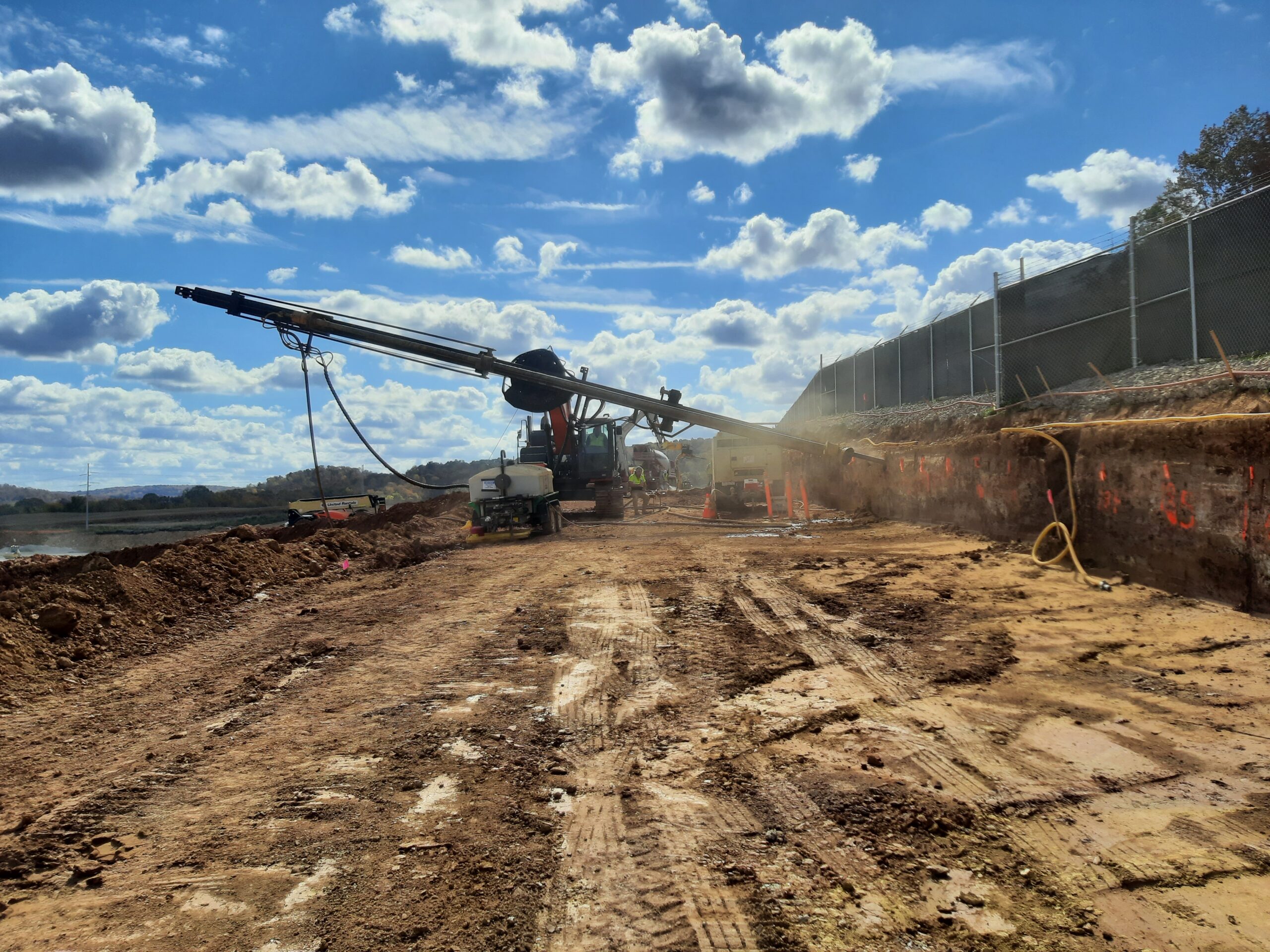
A contractor used its new REV Drill Model 24HDT, mounted on its own CAT 336E excavator, to install the micropile foundation for a bridge replacement. To reach the pile locations, the drill had to extend 12 feet out and 10 feet down to subgrade.
- Piles installed: 38
- Size: 7″ OD x 38′ deep
- Rock socket: 7′ per pile
- Batter: 3:1
- Drill: REV Drill Model 24HDT on a CAT 336E
- Drilling method: Casing advance with a 900 CFM air compressor
A ring bit welded to the bottom of the casing engaged a pilot bit on the inner rod and hammer, so the casing followed the bit as it drilled. Once the casing seated into the top of rock, the inner rod and hammer continued down to drill the rock socket. The contractor handled the drilling with equipment it owned.
Let’s Get Diggin’!
If micropiles are in your next set of plans, talk to our team about self-performing the drilling. We’ll review the job, recommend a drill and tooling setup, and help you decide whether to buy or start with a rental.
Ready to get your hands dirty? See our duplex drilling applications, call us at (301) 662-6552, or contact our team to get started.


